

Reservoirs contribute significantly to the global carbon and nitrogen cycles through the emission of greenhouse gases (GHGs) and temporal sequestration of carbon and nitrogen in their sediments. Methane emissions from reservoirs are elevated when compared to other aquatic ecosystems. The emissions from eutrophic reservoirs are responsible for most of their radiative forcing, accounting for approximately 80% when this is expressed in CO2 equivalents. These values are comparable to emissions from other anthropogenic aquatic ecosystems, such as rice fields, recognized as significant methane emitters. According to the most recent projections, the radiative forcing from reservoirs will be dominated by methane ebullition and degassing in the following decades, whereas CO2 diffusion appears to be stabilized. The results of these projections identify CH4 as the GHG key for developing sound mitigation efforts. The radiative forcing of any given reservoir depends on the balance between GHG emissions and the preservation vs. mineralization of the particulate organic matter in the sediments. GHG emissions will exhibit long-term changes throughout the lifetime of a given reservoir (i.e., its ontogeny). In addition, they will also vary in response to changes in climate, weather, hydrological, and direct anthropogenic (through land use in the contributing watershed or through operational rules) forcings occurring at a wide range of scales (from synoptic to multiannual). The most direct approach to calculating the reservoir’s GHG footprint over time requires long-term monitoring efforts starting with pre-impoundment conditions.
Current Projects
1. ANTICIPA.
However, this approach cannot be used in reservoirs (like most in Spain) already constructed. Here, we propose an approach to reconstruct the changes in the GHG footprint of any given reservoir during its ontogeny and in response to external forcings through the analysis of multiple microbial proxies in combination with empirical and mechanistic models. The microbial populations developing in their sediments and water columns, their structure and function, are the ultimate drivers of CH4 production and consumption. Hence, their analysis can shed light on the dynamics of GHG in those systems. We will use lipid and DNA-based biomarkers of microbial processes in sediment cores and the water column. These biomarkers have complementary features. Lipid biomarkers are well-preserved in the sediments but have a limited taxonomic resolution. In contrast, DNA-based biomarkers have lower preservation potential but are excellent taxonomic and functional markers. We will validate the selected proxies with current microbial structure and function data involved in GHG production and consumption during stratification and mixing periods in two well-monitored eutrophic reservoirs. We will use biomarkers, current observations, and model-based simulations of environmental conditions prevailing in the reservoir to build up our understanding of the linkages between the reservoir’s GHG footprints and external forcings. Our ultimate goal is to develop models that can predict GHG emissions from a given reservoir under extreme climatic and hydrological forcings or in response to changes in their trophic status and could be used to identify and design operational rules and management strategies that minimize CH4 emissions.
2 COSTUMER.
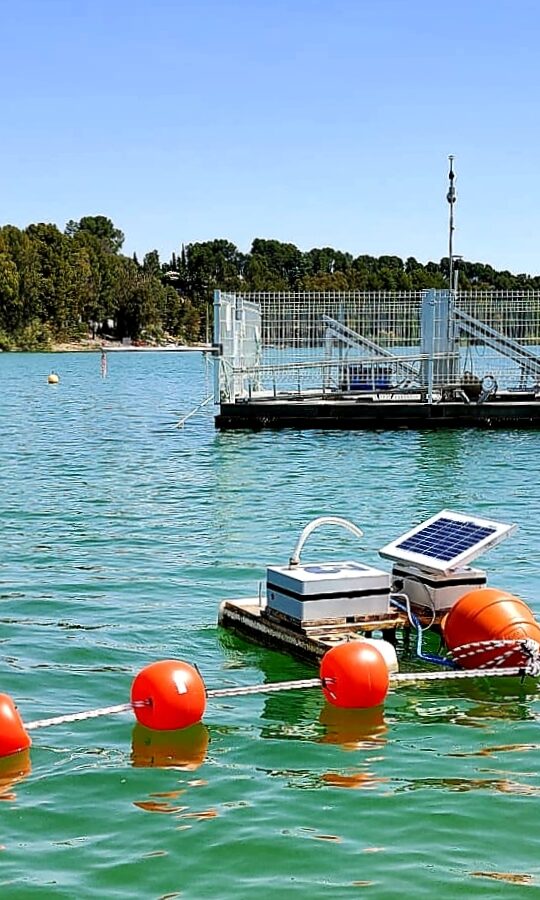
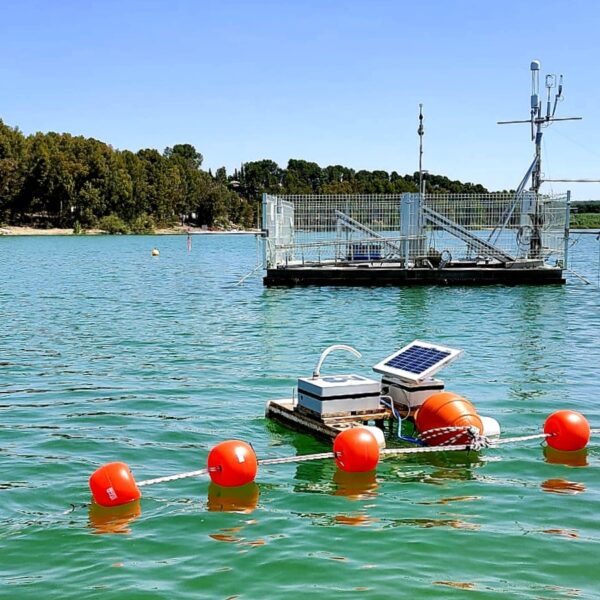
Recent upscaled analyses suggest that reservoirs and lakes combined account for nearly 20% of global CO2 fossil fuel emissions, with 75% of the climate impact attributable to CH4. Unfortunately, these global estimates are highly uncertain, partly because emission estimates are not available for all biomes and reservoir typologies. This is particularly true for the Mediterranean biome, from 30°N to 45°N, where reservoirs with large seasonal-scale temperature and water level fluctuations are the predominant aquatic ecosystems. Moreover, most of the existing measurements of GHG fluxes do not capture the natural spatiotemporal variability of emissions. Eddy Covariance EC technology can be used to resolve the time-variability of these fluxes, but, still, it is a common practice to assume that fluxes are spatially homogeneous to come up with ecosystem-scale (lake-wide) emission estimates. Recent studies have reported, however, that large spatial variability of fluxes could occur within a given system.
This three-year project proposal aims to conduct a comprehensive assessment of time-resolved spatial heterogeneity of CH4 fluxes across the air-water interface in Mediterranean reservoirs, using Cubillas Reservoir as a case example. For this purpose, a series of monitoring platforms and observational techniques, including Eddy Covariance towers, automatic gas traps, hydro-acoustics, high-resolution observations in the sediment/water column, and sediment/lake modeling will be used. We will identify key drivers of the space-time variability in CH4 fluxes and quantify the contribution of spatial variability to the uncertainty in the estimates of ecosystem-scale CH4 emissions. We believe that our project, our modeling tools, and observational procedures, can be used, as a case example, to guide future assessments of GHGs emissions from reservoirs to be conducted in other sites. GHG emissions should be accurately estimated, and their uncertainties assessed quantitatively, to understand our climate and predict its trajectory in the near future, and to guide stakeholders and policymakers in proposing effective strategies to mitigate global warming.
3 NAIADHES.
In the early 1990s, Lynn Margulis introduced the holobiont concept, which considers hosts and their associated microbiomes as superorganisms, moving the ecological science into a new dimension. Since then, expanding our knowledge on the intimate relationships between macro- and microorganisms, both epibionts and endobionts, has become a priority for understanding the mechanisms that govern these interactions, the evolutionary processes that shape them, and their implications for ecosystem functioning. Specifically, in freshwater ecosystems, although numerous studies have demonstrated the crucial role played by macroinvertebrates, knowledge about the ecosystem functions and services performed at the holobiont level remains very limited.
The NAIADHES project emerges with the intention of filling this knowledge gap, with the primary goal of revealing the existence of associated microbiomes exclusive to large freshwater bivalves (commonly known as naiads), a group of organisms whose populations are experiencing one of the most dramatic global declines worldwide. More specifically, the project combines field data, obtained from populations of three native host species (Potomida littoralis, Unio delphinus and Anodonta anatina) and one exotic species (Corbicula fluminea) present in the Duero, Tajo, Guadiana, Guadalquivir, and Guadalete-Barbate basins, with laboratory experiments to: i) characterize the microbiomes associated with shells and soft tissues; ii) determine the influence of the environment and host phylogeny on the composition of host microbiomes; and iii) investigate the potential of the holobiont to provide regulating and supporting ecosystem services, especially those related to carbon and nitrogen cycles. The results will contribute to improve our understanding on the ecosystem functions and services performed by holobionts in continental waters and raise awareness of the need to conserve biodiversity in these environments which, as in the case of freshwater mussels, is highly threatened.

4 HOLOSYSTEMS.
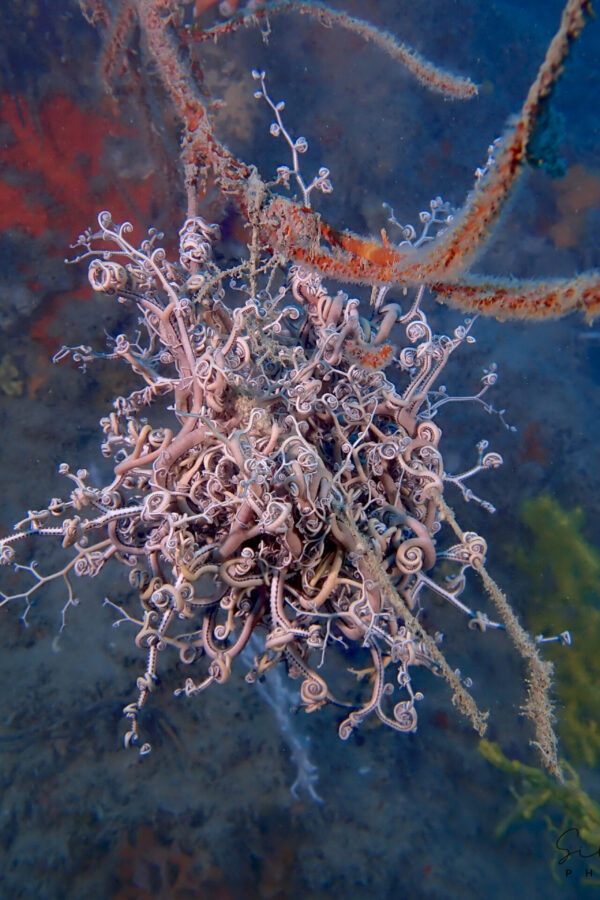
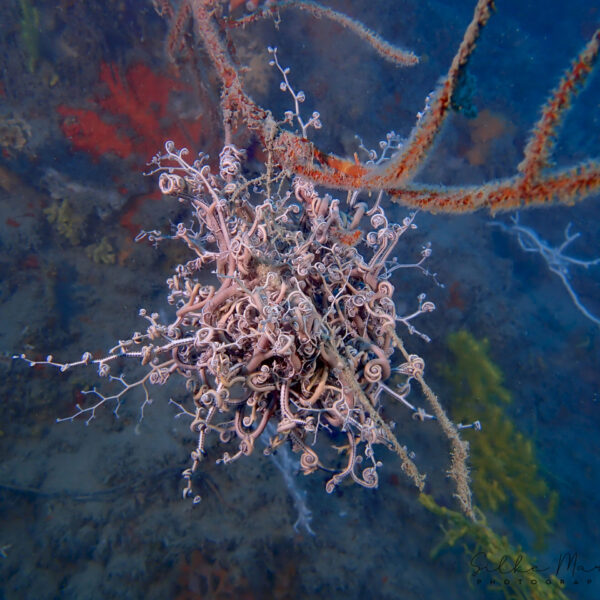
The ecosystem services provided by coastal areas range from resources for our survival to well-being and leisure. However, pressures from a continuously growing human population are threatening their ability to provide these services. In coastal ecosystems, many benthic invertebrates live in association with microorganisms, forming holobionts with which they co-evolve and perform various functions at the ecosystem level. In many echinoderms, these symbiotic relationships are established with bacteria that live in the subcuticular space. Although the function of these bacteria remains unknown, it has been hypothesised that they may be involved in nitrogen recycling. These functions imply ecosystem services beyond the intrinsic value of their diversity.
The main objective of the HOLOSYSTEMS project is to determine whether subcuticular bacteria are widely established in the phylum Echinodermata in the northern coastal area of the Alboran Sea and whether they establish an eco-evolutionary interaction with their hosts by assimilating amino acids, nitrates, and ammonium from the environment. To this end, the first phase will determine the presence and diversity of these bacteria in the most abundant echinoderm species on the coasts of Granada and Málaga. In addition, functional genes associated with nitrification and denitrification processes will be detected and quantified. Once the holobionts with the most significant potential to perform these functions have been identified, their ability to assimilate amino acids, nitrates, and ammonium from the environment will be determined through experimentation. These results will contribute to the evaluation of the ecosystem services provided by echinoderms, which could be key, on the one hand, to mitigating eutrophication and alteration of coastal areas and, on the other hand, to selecting the most efficient extractive species for subsequent use in integrated multitrophic aquaculture.
5 eWARM.
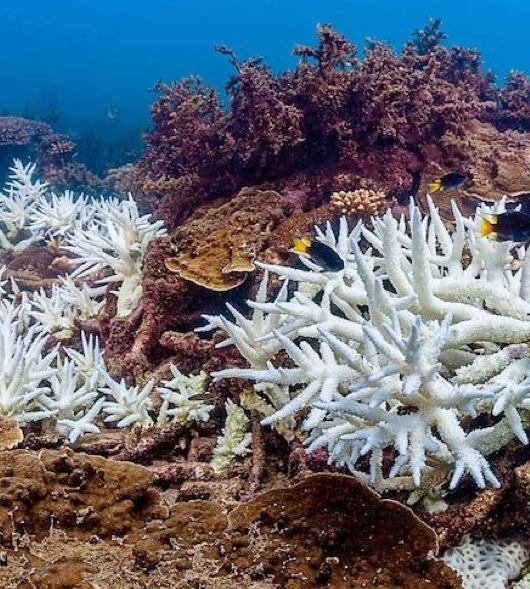
The overarching aim of this project is to unravel how heat tolerance varies across ectothermic species and to explore the profound ecological consequences of this variation. Specifically, we will reconstruct the variation in heat tolerance across different taxa using the innovative ‘thermal tolerance landscape’ framework, identifying key physiological traits that may partially explain these patterns. This will involve mapping heat tolerance at multiple scales to understand how evolutionary and ecological forces shape species’ thermal limits. Furthermore, we will investigate how this variation in thermal tolerance influences species distributions, community structure, and their responses to climate warming.
By analyzing these patterns, we aim to predict which species and ecosystems are most vulnerable to rising temperatures and how shifts in thermal limits could cascade through ecological networks. In addition, we will extend the current framework to account for other environmental stressors—such as drought or hypoxia—that may compound the effects of thermal stress, providing a more comprehensive understanding of species resilience. Finally, we will develop an accessible and user-friendly R package, allowing researchers globally to apply the thermal tolerance landscape approach in their own studies, facilitating cross-disciplinary collaboration and expanding the framework’s utility. This project will not only deepen our understanding of how thermal stress shapes biodiversity but also provide critical tools to predict species’ responses to global warming and inform conservation strategies.
6 STAGES.
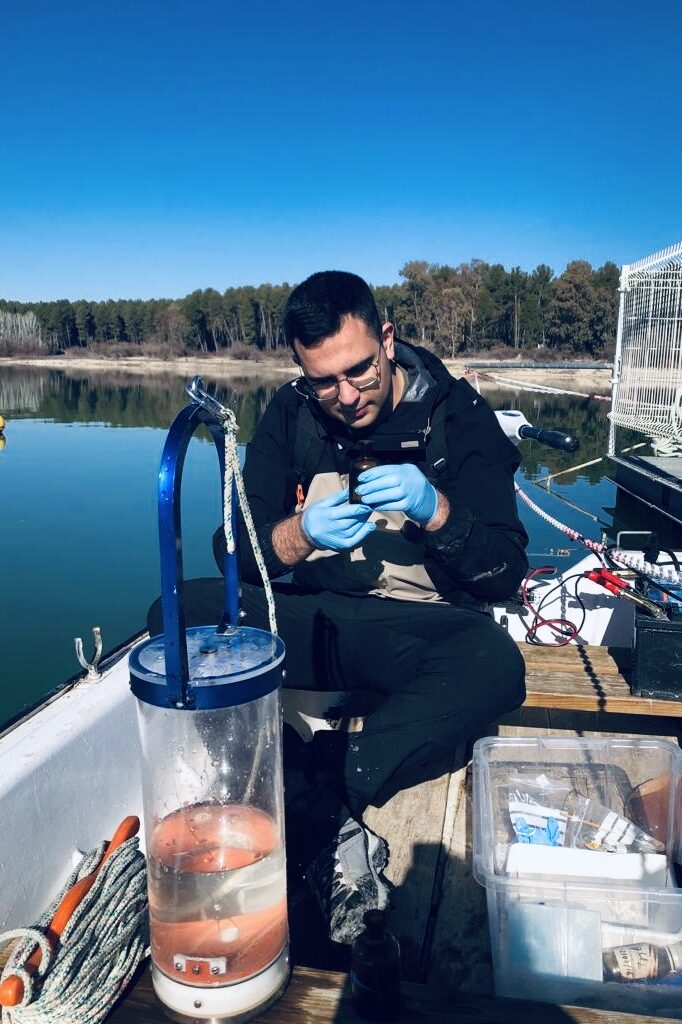
This project is aligned with the ecological-transition objectives. Its purpose is to co-design, with a mixed «Top-Down» (T-D) and «Bottom-Up» (B-U) approach, climate-resilient strategies for the sustainable management of water resources in semi-arid alpine basins of the Mediterranean area. As a novelty, the design will use not only water quantity criteria (water use), but also water quality issues and, in general, criteria related to the integrity of the ecosystem. Most of the works on adaptation strategies to climate change (CC) at the basin scale do not incorporate considerations related to the integrity of the ecosystem, or only evaluate them a posteriori, to quantify the impact of operating rules defined exclusively on the basis of consideration on supply guarantees regarding water-demand volumes. We will use the Alto Genil basin as a case study, in which there are different types of risks (e.g., subsidence and hypoxia), and, where different water resources storage systems (aquifers, snow and reservoirs) can be combined to design optimal conjunctive use management strategies. The specific objectives of the project are: (1) to monitor relevant climatic, hydro-ecological and subsidence data to evaluate/model impacts and risks; (2) to generate local climate scenarios from historical databases and future projections; (3) to develop tools and models to propagate the potential impacts of climate scenarios on demands and resources in the basin.
As a novelty, we will incorporate different sources of information and/or simulation models (physical, conceptual and/or «machine learning») at different spatial and temporal scales, for a better evaluation of impacts on the quantity and quality of water. (4) To identify and assess potential adaptation strategies with a mixed B-U and T-D approach (co-design). As a novelty, we will integrate into the parameters and/or restrictions of a basin-scale management model qualitative (extracted in seminars) and quantitative information (from other models) on the quantity and quality of the resource to assess the integrity of the ecosystem. Indicators will be proposed to analyze CC impacts, especially in periods of droughts. Given the multidisciplinary nature of the proposal, a coordinated project is proposed taking advantage of the existence of complementary teams. The IGME-CSIC team will work on the analysis of flows and water availability in aquifers and in the form of snow. The UGR / UH team will work on the analysis and modeling of quality in rivers and reservoirs. Both teams will work together in the co-design of adaptation strategies to CC. Given the background of the teams and the innovative nature of the proposed research, relevant results will be generated from a wide thematic spectrum, which will constitute an ideal precedent to compete in future international calls. Internationalization is also enhanced by including prestigious foreign researchers in the team. Given the practical interest of the project, reflected in letters of support, some tools and results generated may be subject to technology transfer in a second phase. The economic impact of the results will also be relevant, taking into account that «the cost of repairing the damage is estimated to be six times higher than the costs of adaptation» (H2020-WATER-2014/2015).
7 NIXDENS.
Desarrollo de sistemas low-cost para la monitorización de la densidad y equivalente de agua del manto de nieve para la estimación de recurso hídrico acumulado en forma de nieve en las cuencas de montaña.
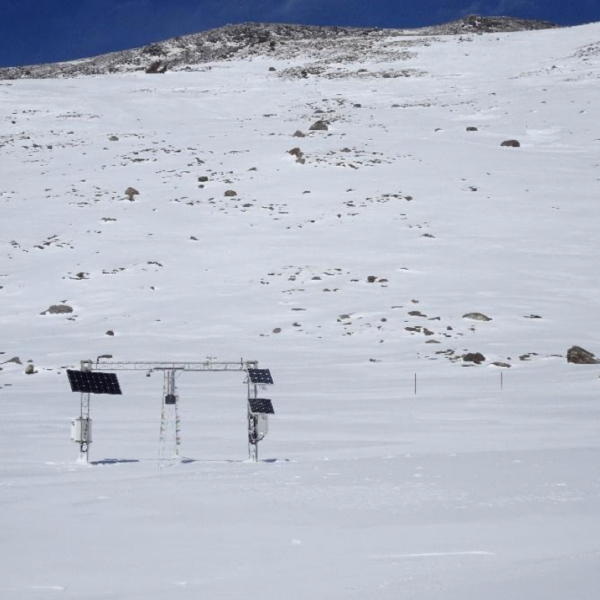
Tragsatec is funding this technical consultancy for its own internal project, which is assessing the viability of new techniques for measuring snow, both in terms of quantity (water equivalent) and properties (liquid content and density). These techniques, based on new technology, are proposed as being more economical, robust and reliable than those currently in use in high mountain areas. However, they have never been tested in the mountains of the Iberian Peninsula, where the snow is thinner and more dynamic. This project, through comparison with in situ measurements, aims to clarify whether these techniques are suitable for our mid-latitudes and whether the sensors that use them can be considered viable as a standard measurement method for our mountains.
8 SUBLIMA.
Effective water management in mountain areas requires precise knowledge of the different water flows or movements and their quantitative importance in the cycle. In snow, one of these flows is sublimation, which involves a ‘loss’ of water to the atmosphere of varying magnitude and little studied. CETURSA, the Sierra Nevada ski resort, in an effort to clarify the magnitude of this flow, is funding this small introductory study in which experiments are carried out to directly measure this sublimation, which will be used to validate existing snow process simulation models. The models can be used to scale the importance of sublimation to the entire Sierra, as well as to extend it to other past and future periods. The tests are carried out on both natural and artificial snow, as well as on processed or compacted snow and unmanaged snow, as differences in behaviour are expected between all of them.
11 MicroMotion
Desvelando la formación de biofilms en superficies abióticas con diferente mojabilidad y sobre equinodermos.